
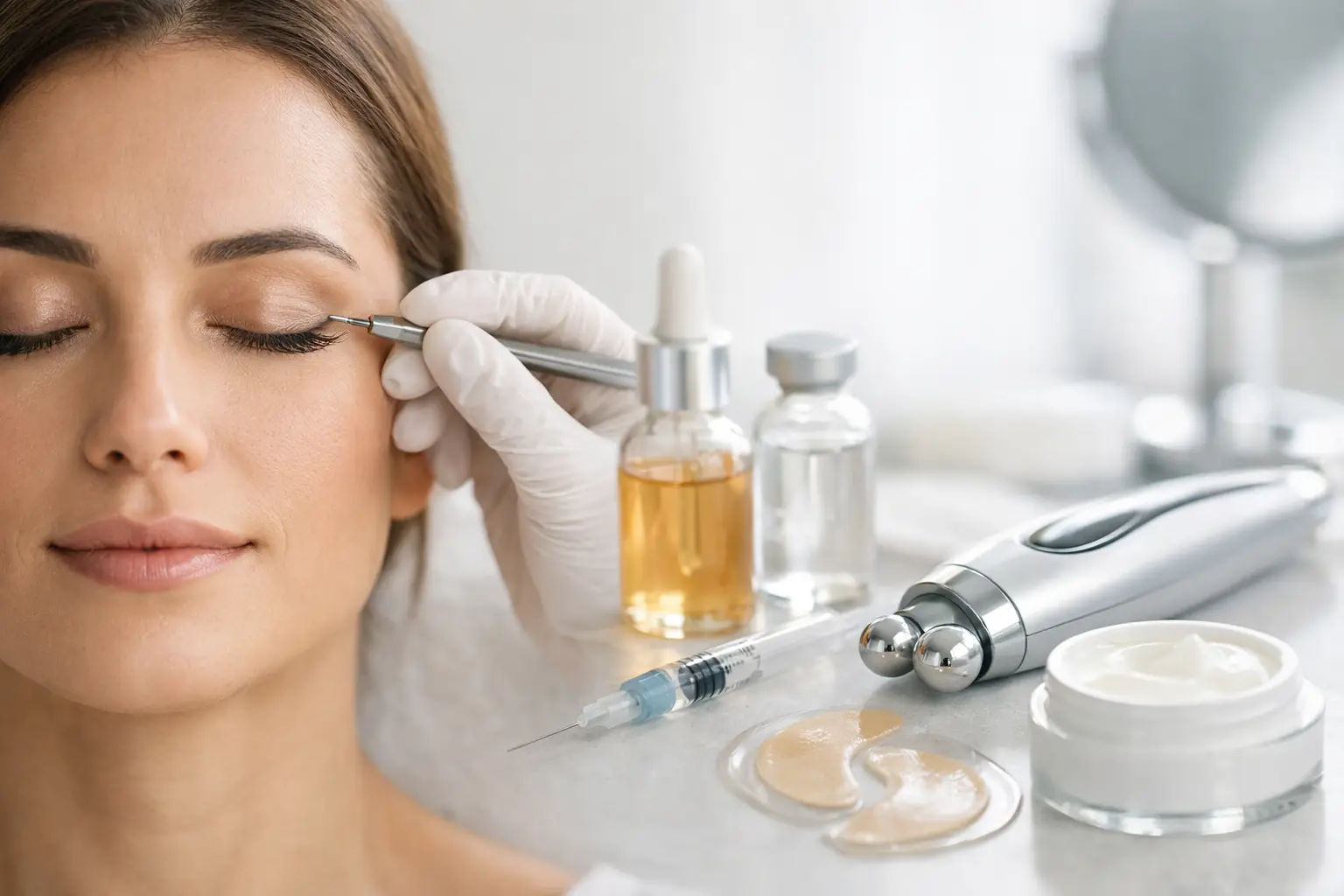
Heavy upper lids, under-eye bags, and crepey skin can make you look tired even after a full night’s sleep. The best alternatives to eyelid surgery can help you create a more rested, lifted-looking appearance without the recovery period, high cost, or permanent commitment of an operation.
For many people, the real goal is not surgery. It is looking like themselves on a better day: smoother under-eyes, less visible puffiness, softer lines, and a brighter overall expression. The right option depends on what you want to improve, how quickly you want to see a change, and how much downtime you are willing to accept.
Why People Look Beyond Eyelid Surgery
Blepharoplasty can be a useful medical or cosmetic procedure for some people, especially when excess upper-lid skin affects vision or when a long-lasting structural change is the priority. But it is still surgery. That means consultations, healing, bruising, swelling, cost, and the possibility that your final result will take weeks or months to settle.
Many adults are not looking for that level of intervention. They may want to look polished for work, a reunion, photos, or everyday life without scheduling time away from their routine. Others want to test less invasive options first before deciding whether surgery makes sense.
That is where non-surgical choices shine. They cannot remove excess skin or reposition fat in the same way surgery can. They can, however, visibly improve the appearance of puffiness, fine lines, texture, and laxity – often with far less commitment.
Best Alternatives to Eyelid Surgery for a Refreshed Look
Instant tightening serums for under-eye bags and lines
For fast cosmetic improvement, an instant tightening serum is often the most practical place to start. These formulas create a temporary tightening film on the skin’s surface, helping under-eye bags look flatter and fine lines look less noticeable as the product dries.
This option is ideal when your concern is visible puffiness, crepey under-eye texture, or lines that show up more strongly under makeup. The appeal is simple: no needles, no recovery, and no waiting weeks to see whether a treatment worked. Applied correctly to clean, dry skin in a very thin layer, the result can be a smoother, more awake-looking finish within minutes.
EpiLift is designed for exactly this kind of immediate beauty payoff, helping visibly tighten and smooth areas such as under-eye bags, crow’s feet, and facial lines for a more refreshed appearance. It is a cosmetic effect, not a surgical replacement, but that distinction is also the advantage for anyone who wants flexibility. Use it when you want to look your best, then continue with your normal routine.
The trade-off is that instant formulas are temporary. Technique matters, too. Using too much product, applying it over rich creams, or moving the area before it dries can leave a visible residue. A light hand and a few minutes of patience make all the difference.
Retinoids, peptides, and hydrating skincare
If fine lines and thinning-looking skin are your main concern, consistent skincare can make the eye area look smoother over time. Retinoids can support skin renewal, peptides are commonly used to improve the appearance of firmness, and hyaluronic acid helps draw moisture into the skin for a plumper look.
This is the slow-and-steady route. It will not erase pronounced bags before dinner or lift a heavy upper lid, but it can improve the quality and resilience of the skin over several weeks and months. Because the eye area is delicate, use products made for that area and introduce stronger active ingredients gradually.
A smart routine often combines long-term skincare with an immediate tightening product for days when you want extra visible polish. One supports your skin over time; the other delivers a quick cosmetic boost when the mirror, camera, or occasion calls for it.
Neuromodulator injections for expression lines
Injectable neuromodulators are commonly used around the eyes to soften crow’s feet and other expression lines. By relaxing targeted muscle movement, they can make the outer eye area appear smoother for several months.
They are not the best answer for true under-eye bags or loose skin. In fact, treating the wrong area can sometimes make certain concerns more noticeable. Results also depend heavily on the skill and judgment of a qualified medical provider.
For people bothered mainly by lines that appear when smiling or squinting, this may be worth discussing with a licensed professional. For someone who wants a needle-free, at-home option with no appointment, an instant smoothing serum is the simpler choice.
Dermal fillers for hollows beneath the eyes
Sometimes what looks like an under-eye bag is partly a shadow created by volume loss in the tear trough. In these cases, a carefully placed filler may reduce the hollow appearance and make the transition from lower lid to cheek look smoother.
This is a treatment that requires real caution. The under-eye area is technically complex, and filler is not appropriate for every person, especially if puffiness is the primary issue. It can also involve swelling, bruising, cost, and the need for future maintenance.
A reputable, experienced injector should assess whether hollows, bags, pigmentation, skin laxity, or a combination of factors are causing the concern. There is no one-size-fits-all syringe for tired-looking eyes.
Laser and radiofrequency skin tightening
Laser resurfacing and radiofrequency treatments can improve the look of fine lines, texture, and mild skin laxity by encouraging collagen remodeling. They can be effective for people who want more noticeable change than skincare alone may provide without going straight to surgery.
The trade-off is that these treatments are not instant, inexpensive, or entirely downtime-free. Depending on the treatment, you may experience redness, swelling, peeling, or sensitivity. Results usually develop gradually, and multiple sessions may be recommended.
These options tend to make the most sense for mild to moderate texture and firmness concerns. They are less likely to solve significant upper-lid hooding or prominent fat pads that are creating persistent under-eye bags.
Makeup techniques that brighten and lift
Makeup will not change anatomy, but the right approach can dramatically change what the eye area emphasizes. A lightweight, hydrating concealer can reduce the appearance of darkness without settling into lines. Placing a soft, brighter shade at the inner corner can make eyes look more awake, while gently lifted liner and lashes can create the illusion of a more open eye.
Avoid piling on thick concealer in an attempt to cover everything. Heavy coverage can catch on texture and make fine lines look more pronounced. A smoother base usually starts with skincare and a light touch.
How to Choose the Right Non-Surgical Option
Start by identifying the concern you see most clearly in the mirror. If it is morning puffiness or under-eye bags before an event, immediate topical tightening is usually the fastest route. If it is persistent crow’s feet, injections or a long-term skincare routine may be more relevant. If it is hollowing or shadowing, a professional evaluation can help determine whether filler is appropriate. If loose skin is significant, surgery may still be the option that delivers the most structural change.
Budget and lifestyle matter just as much. At-home treatments offer control, privacy, and the freedom to use them only when you choose. In-office procedures may last longer, but they ask more of your calendar and your wallet. There is nothing wrong with starting conservatively and moving up only if you decide you need more.
Get Better Results From At-Home Tightening
Application is what separates a natural-looking result from a disappointing one. Begin with clean, completely dry skin. Skip oily eye creams directly beneath the product, because they can interfere with the tightening film. Apply a tiny amount, gently smooth it over the concern, and let it dry without smiling, squinting, or touching the area.
Once dry, assess the finish before adding makeup. If you use concealer, choose a light formula and pat it on carefully rather than rubbing. If you see white residue, that is usually a sign that too much product was used or it was layered over incompatible skincare. Less is more.
When to Speak With a Medical Professional
If a drooping lid affects your vision, if swelling is sudden or uneven, or if you have irritation, pain, or changes in vision, speak with a medical professional promptly. Cosmetic products are for visible appearance concerns, not medical symptoms.
For elective treatments, choose qualified providers who examine your individual anatomy and clearly explain benefits, limitations, risks, and recovery. The best decision is one that fits your goals, not one that pressures you into the biggest procedure.
You do not need surgery to look noticeably more rested tomorrow. Start with the level of change you actually want, use a solution that fits your life, and give yourself the confidence of seeing a fresher face in the mirror on your own terms.
Leave a Reply